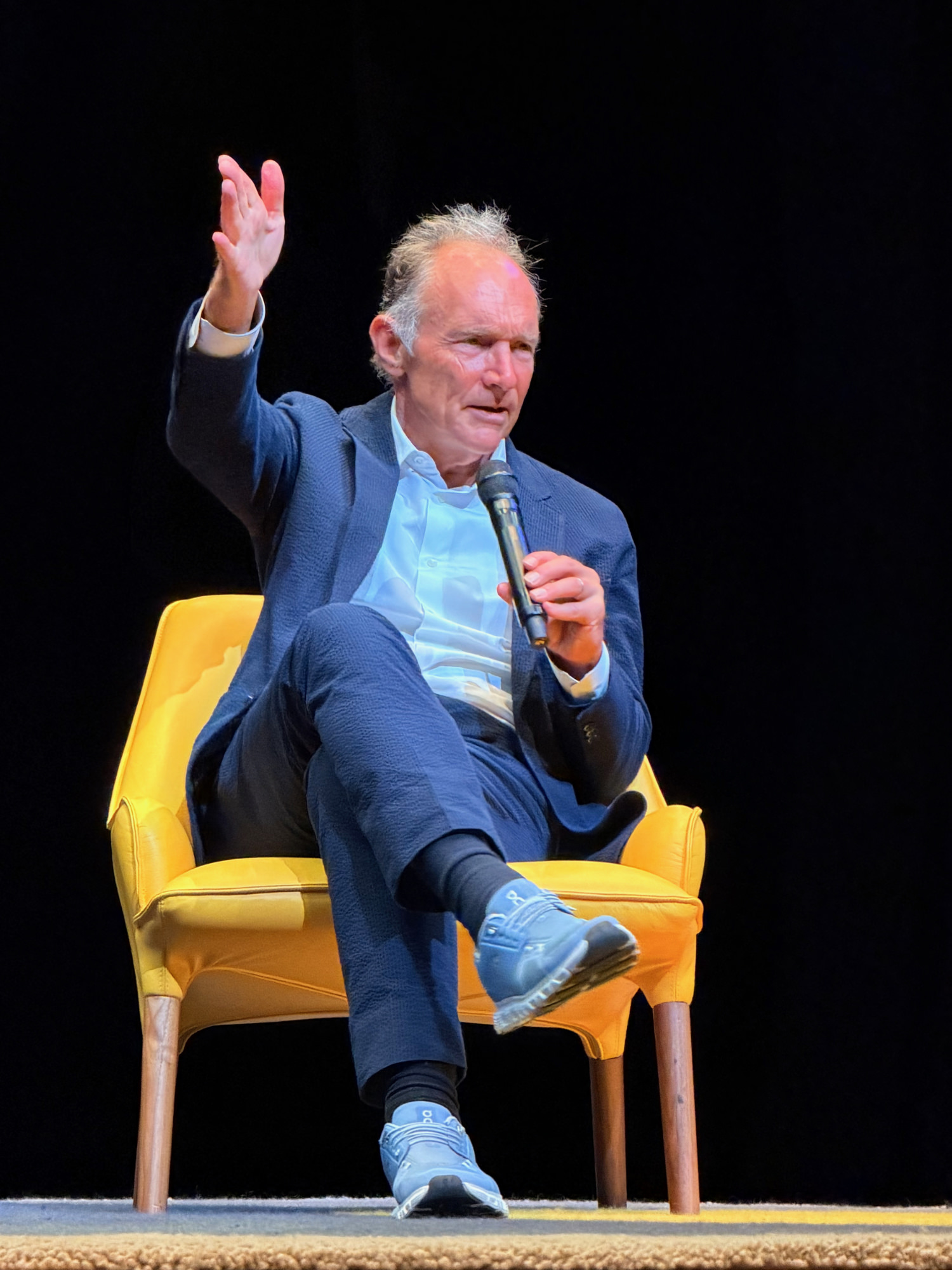
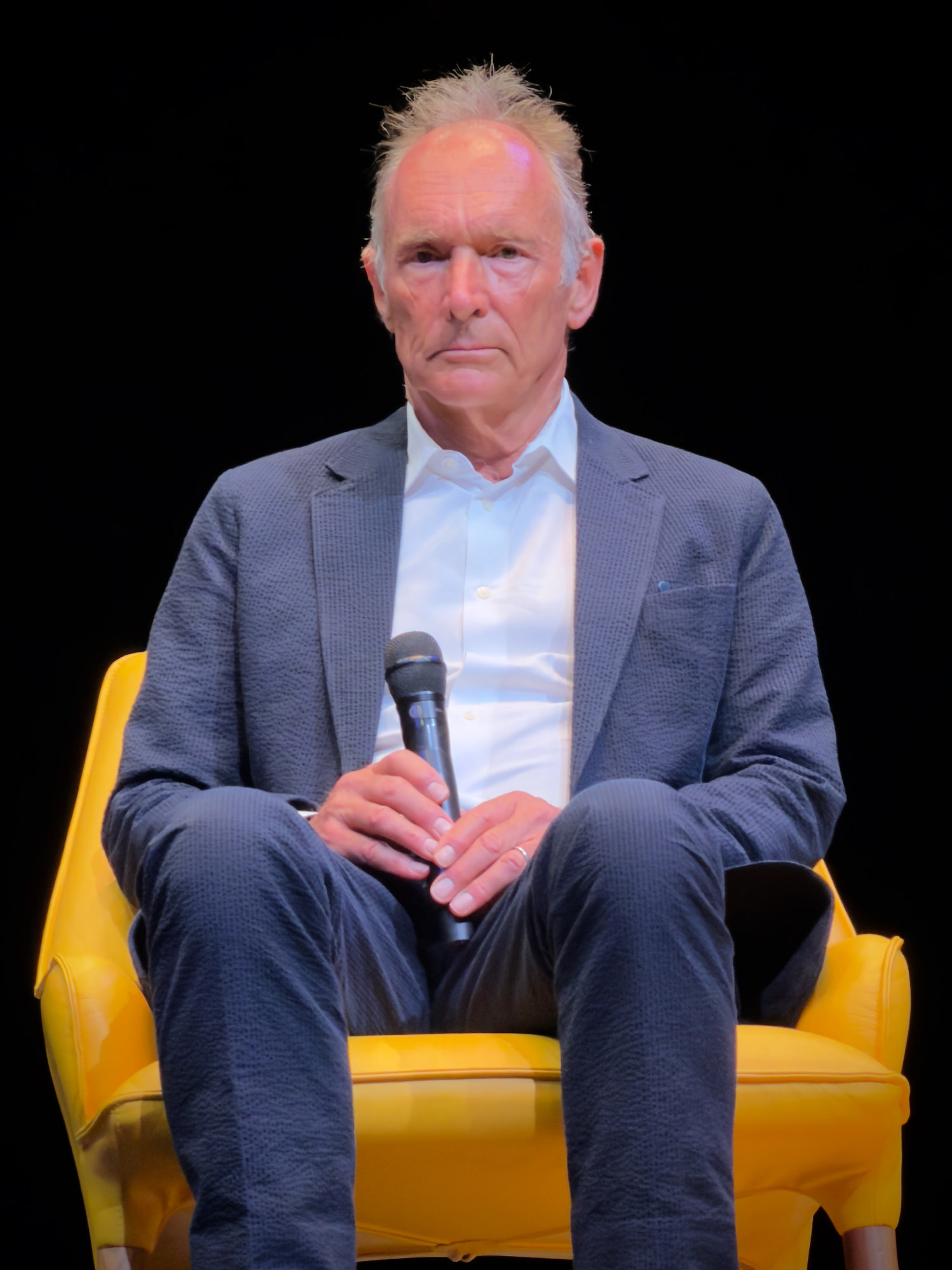
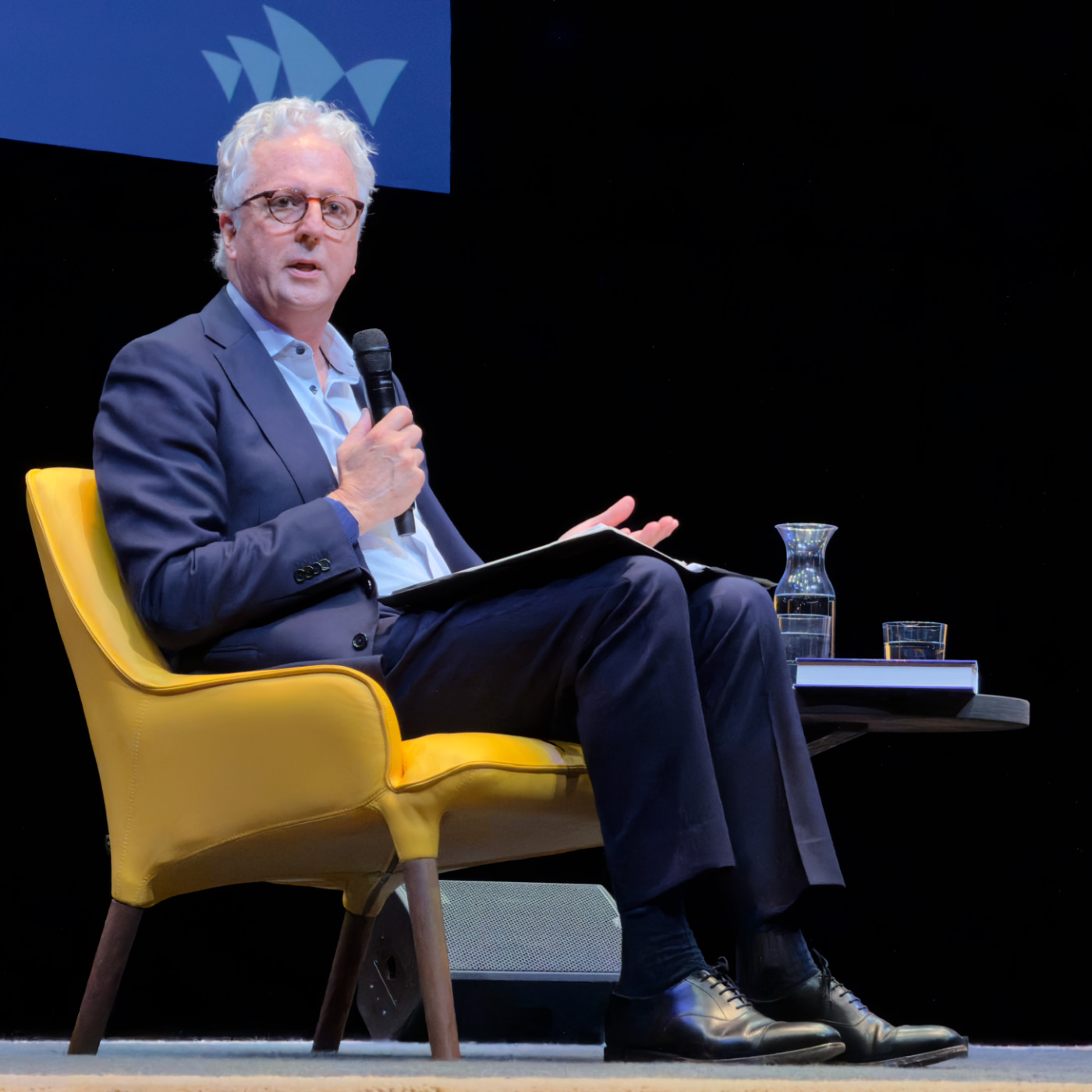
# Mark Scott in Conversation with Sir Tim Berners-Lee: This is for Everyone
Sir Tim Berners-Lee argues that the web is at a crossroads: it can either continue to fragment and centralize around powerful platforms, or be deliberately reshaped to restore user control, trust, and openness.
## 1. The Original Vision of the Web
- The web was designed as an open, decentralized system where anyone could publish, link, and innovate without permission.
- Early design choices prioritized universality, interoperability, and low barriers to entry.
- TBL emphasizes that the web's problems are not inherent to the technology, but to how it has been governed and commercialized.
## 2. How the Web Went Off Track
- Power has consolidated around a small number of platforms that control data, attention, and infrastructure.
- Business models built on surveillance, targeted advertising, and engagement maximization have distorted incentives.
- This has led to:
- Loss of user agency over personal data
- Misinformation and polarization
- Erosion of trust in online information and institutions
 ## 3. Data Ownership and Control
- TBL stresses that data should belong to the individual, not the platform.
- Users currently “rent” access to digital services by giving up control of their data.
- True reform requires structural change, not just better privacy policies or regulation at the margins.
## 4. Solid and Re-Decentralization
https://solidproject.org
- Solid _([Social Linked Data](https://en.wikipedia.org/wiki/Solid_(web_decentralization_project) ))_ is presented as a technical and social project to rebalance the web.
- Key idea: separate data storage from applications, allowing users to keep their data in personal data stores (“pods”). Like a backpack for your data, with different pockets for different apps.
- Apps request permission to use data (backpack pockets) rather than owning it outright.
- This model restores:
- User choice
- Competition
- Portability between services
Flanders government (where I'm from) was brought up as the first region in the world to widely [implement Solid](https://solidlab.be) for citizen data management. (although seems to have been discontinued now)
## 5. Regulation vs. Architecture
- Regulation is necessary but insufficient on its own.
- Laws can constrain behavior, but architecture shapes behavior by default.
- TBL advocates designing systems that make ethical outcomes the easiest outcomes.
## 3. Data Ownership and Control
- TBL stresses that data should belong to the individual, not the platform.
- Users currently “rent” access to digital services by giving up control of their data.
- True reform requires structural change, not just better privacy policies or regulation at the margins.
## 4. Solid and Re-Decentralization
https://solidproject.org
- Solid _([Social Linked Data](https://en.wikipedia.org/wiki/Solid_(web_decentralization_project) ))_ is presented as a technical and social project to rebalance the web.
- Key idea: separate data storage from applications, allowing users to keep their data in personal data stores (“pods”). Like a backpack for your data, with different pockets for different apps.
- Apps request permission to use data (backpack pockets) rather than owning it outright.
- This model restores:
- User choice
- Competition
- Portability between services
Flanders government (where I'm from) was brought up as the first region in the world to widely [implement Solid](https://solidlab.be) for citizen data management. (although seems to have been discontinued now)
## 5. Regulation vs. Architecture
- Regulation is necessary but insufficient on its own.
- Laws can constrain behavior, but architecture shapes behavior by default.
- TBL advocates designing systems that make ethical outcomes the easiest outcomes.
 ## 6. The Role of Governments, Companies, and Citizens
- Governments should protect rights and enforce accountability, without stifling openness.
- Companies can innovate within models that respect user agency and data dignity.
- Citizens must demand better systems and be aware that convenience often comes with hidden costs.
## 7. Outlook
- TBL remains cautiously optimistic.
- The web is still young enough to be corrected, but action is urgent.
- The future of the web depends on intentional choices, not inevitability.
## In Summary
The conversation framed the web's current dysfunction as a design and power problem, **not** a technological failure.
Tim's message is clear: reclaiming the web requires redesigning its foundations around human values — especially control, trust, and openness — rather than trying to patch over systemic flaws.
---
### On invention and progress
> "I much more believe in the hard-slog model than getting up in the bath shouting 'Eureka.'"
TBL rejects the myth of sudden breakthroughs and describes the web as the result of accumulated experience and sustained effort.
---
### On standards and power
> "Browser manufacturers wanted to add features to dominate… that's why we had to make sure there was just one web."
TBL describes standardization as a defensive move against fragmentation and monopoly, via W3C.
---
### On data ownership
> "At the moment, our data is out there, but it's held by big tech firms. It should be our data."
A direct articulation of the problem Solid is intended to address.
---
### On personal AI
> "I want an AI that works for me, the way my doctor works for me."
TBL envisions AI as a personal assistant that respects user agency and privacy, rather than a tool for surveillance or manipulation.
---
### On legacy
> “I don't spend a lot of time thinking, '_Tim changed the world._' Life's too short.”
## 6. The Role of Governments, Companies, and Citizens
- Governments should protect rights and enforce accountability, without stifling openness.
- Companies can innovate within models that respect user agency and data dignity.
- Citizens must demand better systems and be aware that convenience often comes with hidden costs.
## 7. Outlook
- TBL remains cautiously optimistic.
- The web is still young enough to be corrected, but action is urgent.
- The future of the web depends on intentional choices, not inevitability.

## In Summary
The conversation framed the web's current dysfunction as a design and power problem, **not** a technological failure.
Tim's message is clear: reclaiming the web requires redesigning its foundations around human values — especially control, trust, and openness — rather than trying to patch over systemic flaws.
---
### On invention and progress
> "I much more believe in the hard-slog model than getting up in the bath shouting 'Eureka.'"
TBL rejects the myth of sudden breakthroughs and describes the web as the result of accumulated experience and sustained effort.
---
### On standards and power
> "Browser manufacturers wanted to add features to dominate… that's why we had to make sure there was just one web."
TBL describes standardization as a defensive move against fragmentation and monopoly, via W3C.
---
### On data ownership
> "At the moment, our data is out there, but it's held by big tech firms. It should be our data."
A direct articulation of the problem Solid is intended to address.
---
### On personal AI
> "I want an AI that works for me, the way my doctor works for me."
TBL envisions AI as a personal assistant that respects user agency and privacy, rather than a tool for surveillance or manipulation.
---
### On legacy
> “I don't spend a lot of time thinking, '_Tim changed the world._' Life's too short.”